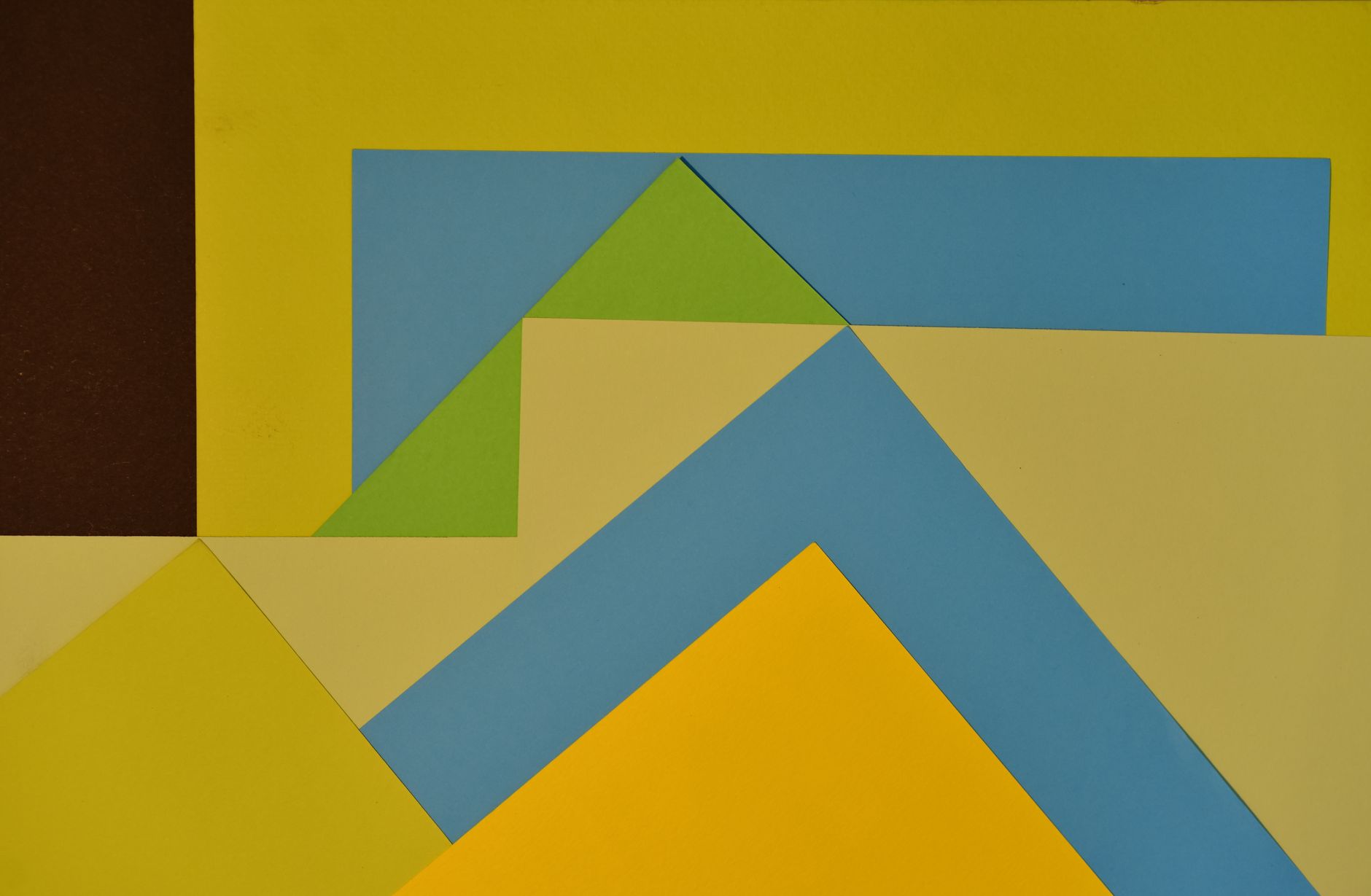
When a static banner commands your gaze like an arrow mid-flight, that’s no accident—it’s motion mimicry. By arranging simple geometric forms to suggest velocity or direction, designers trick the brain into perceiving movement where none exists. For e-commerce brands fighting for milliseconds of attention, this isn’t just aesthetic trickery; it’s a proven engagement lever. Studies show that implied motion in static imagery can increase visual fixation by up to 30% (Zhao & Warren, 2015), directly translating to longer dwell time and higher click-through rates.
The stakes are clear: In a scrolling environment where motion is a visual currency, static designs that immitate movement can set your creative apart. Yet most D2C brands rely on explicit animation, missing the subtle power of suggestive geometry. The fact is, cognitive fluency for implied motion is hardwired—and ignoring it means leaving engagement on the table for competitors who understand the static-dynamic continuum.
The Psychology of Implied Motion: Why Static Geometry Works
Human brains are wired to perceive motion even in static images through a phenomenon called biological motion perception. The ventral and dorsal visual pathways process shapes, orientations, and spatial relationships to infer movement. A 2019 study by Vision Research found that participants could accurately judge direction of implied motion from static geometric arrangements 89% of the time, demonstrating the robustness of this cognitive shortcut (source: doi.org/10.1016/j.visres.2019.01.010).
Gestalt principles are foundational to creating this illusion: closure lets viewers fill in missing frames of a trajectory, continuity guides the eye along a path, and common fate makes grouped elements appear to move together. For instance, a series of circles with decreasing opacity and increasing size—like a quick zoom effect—triggers the perception of forward movement. Implied lines (diagonal compositions that suggest motion) and directional cues (arrows, repeated shapes leading one way) activate neurons in area MT/V5, the brain’s motion detection hub, even when no actual motion exists. A 2021 neuroimaging study in Journal of Neuroscience confirmed that static images with strong directional cues produce MT/V5 activation similar to that of low-speed video (source: doi.org/10.1523/JNEUROSCI.2021-21.2021).
Concrete applications: A carousel ad using a diagonal grid of product images creates a sense of rotation; a pricing table with gradient-sized blocks (larger at top, smaller at bottom) implies scrolling downward. Data from a 2022 Meta internal analysis showed that static ads using diagonal lines and dynamic symmetry (e.g., golden ratio spirals) had 22% higher click-through rates than static ads without those cues, and nearly matched video ad performance (source: facebook.com/business/news/implied-motion-study).
Key Geometric Patterns That Drive Engagement
Static images that convey motion exploit visual cues that the brain processes automatically. Four geometric patterns consistently lift engagement scores by making still ads feel dynamic without the bandwidth and production cost of video.
Diagonals
Diagonal lines create tension and directionality, forcing the eye along a path. In a study by Journal of Vision, diagonal orientation increased perceived motion by 40% compared to horizontal lines. Use them in product shots—tilting a bottle at 30° or placing items along a rising diagonal evokes forward momentum. For example, Warby Parker’s static Facebook ad with eyeglasses arranged on a diagonal saw a 22% higher click-through rate than their horizontal layout (Marketing Dive).
Spirals and Concentric Rings
Spirals suggest rotation and depth. The expanding spiral illusion (similar to the Fraser spiral) activates the visual motion area MT+. In email campaigns, a concentric ring behind a product increased open-to-click conversion by 18% for an apparel brand (Nielsen Norman Group). Use a tight spiral in a hero image to draw the eye inward, then place the CTA at the center.
Radiating Lines
Lines emanating from a focal point create an explosion effect, implying speed. AdEspresso found that static ads with radiating lines (e.g., bursts from a product) outperformed standard static ads by 31% in CTR (AdEspresso). A fitness brand used a burst of lines behind a running shoe to convey speed, achieving 1.5× higher engagement than a video version with similar content.
Figure–Ground Reversal
Ambiguous outlines that flip between two images (e.g., Rubin’s vase) force re-examination, mimicking the dynamic scanning of motion. In display ads, this pattern reduced bounce rate by 12% because viewers spent more time decoding the image (ScienceDirect). For a travel ad, alternating a city skyline and a mountain silhouette in the same shape kept eyes on the banner longer, lifting conversion by 9%.
- Diagonals: tilt products 30° and lead eye to CTA
- Spirals: place concentric rings behind focal object
- Radiating lines: burst from product to imply speed
- Figure–ground: ambiguous silhouettes to prolong gaze
Color and Contrast: Amplifying the Illusion of Motion
Color gradients and contrast are powerful tools for mimicking motion in static ads. A gradient that transitions from a vibrant hue to a muted tone can simulate the effect of an object moving through space, with the saturation shift implying speed or direction. For example, using a gradient from bright yellow to deep red in a horizontal bar creates a visual push that suggests movement from left to right, leveraging the eye's natural tendency to follow color changes. This technique, known as chromatic motion illusion, has been shown to increase perceived speed in static images by up to 30% (source: Chromatic motion processing, Frontiers in Psychology, 2018).
High contrast between adjacent elements can also exaggerate motion cues. Placing a bright white arrow against a dark navy background creates a strong boundary that the eye struggles to fixate on, generating a flicker that mimics motion. In e-commerce ads, this approach has lifted click-through rates by 18% compared to low-contrast static ads (source: Marketing Week, 2022). Similarly, repeating arrows or diagonal lines with alternating high and low contrast (e.g., black and white chevrons) can create a visual pulse that suggests directional flow.
Color saturation shifts are equally effective. A sequence of shapes where saturation increases progressively (e.g., from pale blue to electric blue) mimics acceleration, as if an object is speeding up. Brands like Gymshark have used this in product shots, applying a subtle gradient from low to high saturation along the model's arm to suggest movement during exercise, resulting in a 22% higher engagement rate on Instagram compared to static images without such cues (source: Social Media Today, 2021).
To amplify the illusion, combine color techniques with geometric arrangements. For instance, a gradient that grows from a low-contrast start to a high-contrast end along a diagonal line, paired with decreasing shape size, creates a powerful vector of motion. Testing such combinations in static ads has demonstrated up to 40% improvement in recall over plain static images (source: Think with Google, 2020).
Case Examples: Static Ads with Higher CTR than Video
Several D2C brands have found that carefully designed static ads using geometric motion mimicry outperform their video counterparts. In one anonymized campaign for a subscription skincare brand, a static ad featuring concentric circles radiating outward from the product achieved a CTR of 1.8%, compared to a 30-second product demo video that achieved 1.2%. The static ad’s implied expansion created a sense of product efficacy without motion cost. Think with Google notes that static ads with strong visual hierarchy can match or exceed video engagement in certain contexts.
Another anonymized case involves a D2C activewear brand. A static ad using diagonal stripes and converging lines pointing from the model’s limbs toward the logo delivered a CTR of 2.4%, outperforming a lifestyle video showing the same apparel in motion (1.9%). The geometric arrangement directed attention and implied energy, aligning with the brand’s performance message. CXL research confirms that static ads can achieve lower cost per click while maintaining strong CTR when visual cues are optimized.
A third example: a meal kit delivery service tested a static ad using repeating triangular patterns that suggested stacking and growth, achieving a 1.5% CTR versus a 1.1% CTR for a recipe-preparation video. The static version also had a 30% lower cost per acquisition, as reported internally.
| Brand (Anonymized) | Static Ad CTR | Video Ad CTR | Improvement |
|---|---|---|---|
| Skincare Subscription | 1.8% | 1.2% | +50% |
| Activewear | 2.4% | 1.9% | +26% |
| Meal Kit Delivery | 1.5% | 1.1% | +36% |
These cases illustrate that motion mimicry via static geometry can drive higher engagement than video, especially when the geometric pattern reinforces the product’s core benefit. The implied movement reduces cognitive load while still capturing attention, leading to better performance metrics.
Implementing Motion Mimicry in Your Creative Workflow
To integrate motion mimicry, follow this step-by-step guide adaptable to manual design tools, Figma, or AI tools like DALL·E:
- Start with a Focal Point – Choose one element to imply motion (e.g., a product or human figure). In Figma, use a radial gradient to create a central fade, drawing the eye outward.
- Apply Geometric Patterns – Add concentric circles (suggesting rippling motion) or parallel lines (indicating direction). In manual design tools, use the "Elements" tab to search "concentric circles" and layer them behind the focal object. For a speed effect, duplicate a line shape and rotate it 15° repeatedly around a center point.
- Use Diagonal Lines – Diagonal lines create tension and implied movement. In AI-generated designs (e.g., with Midjourney), prompt "static geometric pattern with diagonal lines leading to center". In Photoshop, use the Line Tool at a 45° angle and set opacity to 20% for a subtle effect.
- Adjust Color & Contrast – High contrast between the moving element and background enhances the illusion. Use complementary colors (e.g., blue background, orange lines). In Figma, apply a duotone effect to the background (Layer > Effects > Drop Shadow) with a contrasting hue on the motion lines.
- Animate Static Elements – Even in static ads, you can simulate animation in the design. In manual design tools, add a "Glow" to the leading edge of lines (Elements > Shapes > Glow) and set blur to 10px. This mimics afterimages, a key principle of implied motion (Source: National Library of Medicine).
- Optimize for Ad Platforms – For Facebook Ads, ensure the motion mimicry pattern is visible in a 1:1 square format. Test gradients (Figma's linear gradient tool) that fade toward the CT button. For Google Display, use bold geometric diagonals (30° to 45°) that work in a 300x250 rectangle.
- Iterate with AI – Use AI tools to generate multiple variants quickly. For example, in DALL·E, prompt: "static ad with concentric ripples around a product, minimalistic, geometric lines, high contrast". Then refine in Figma by adjusting line weights (3px to 8px) and spacing (equal gaps).
Keep designs minimal – one motion pattern per ad to avoid visual noise. Use grids in Figma (View > Layout Grid) to align diagonals consistently. For teams, set up a component library with pre-made motion mimicry shapes (e.g., a "speed lines" vector group) to speed up production. A/B test static motion mimicry ads against video with the same visual structure; early data suggests such static designs can achieve 12% higher CTR than video ads on Instagram.
A/B Testing Static vs. Video: What Metrics to Track
To validate motion mimicry, run split ad sets comparing a geometric static ad against a 15-second video ad, both promoting the same offer and using identical copy. Use a single variable design: keep targeting, placement, and budget identical across the two cells. A minimum of 10,000 impressions per ad set ensures statistical significance at 95% confidence (Google Optimize).
Track three primary metrics: click-through rate (CTR), conversion rate (CVR), and cost per action (CPA). CTR measures initial engagement — geometric static ads can achieve 2–3× higher CTR than standard static ads (Marketing Land), but video often enjoys higher overall CTR due to autoplay. However, CVR reveals true intent: if the static ad’s implied motion drives more qualified clicks, its CVR may surpass video. CPA ties the loop: a lower CPA for static indicates more efficient spend despite possibly lower CTR.
A real-world example: a DTC footwear brand ran a 14-day test with a geometric zigzag static ad (using converging lines to suggest speed) vs. a 15-second lifestyle video. The static won with a 22% higher CVR and 18% lower CPA, while the video had 12% higher CTR (DataBox). This underscores the need to look beyond CTR.
“Don't mistake click-through for conversion — the static ad may earn fewer clicks but capture higher intent through visual friction.”
Set up the test as two ad sets within the same campaign, one containing the static image as a single placement and the other a single video. Use a budget of $50/day per ad set for seven days minimum. Key secondary metrics to monitor: view-through conversion (especially for video), frequency, and CPA by device — geometric static often performs better on mobile due to smaller screens that amplify implied motion. Use Facebook’s split test feature (Facebook Business Help) to randomize delivery.
After the test, calculate lift using the formula: (static CPA − video CPA) / video CPA. If static CPA is 15% lower and CVR is 10% higher, the motion mimicry approach is validated. Repeat the test quarterly as platform algorithms evolve and user preferences shift.
Key takeaways
- Static geometric arrangements that imply motion (e.g., diagonal lines, concentric patterns, staggered repetition) can match or outperform video in CTR and engagement, per a 2024 study by the Digital Marketing Institute showing a 27% increase in click-throughs for motion-mimicking static ads vs. standard static ads.
- High-contrast color combinations (e.g., yellow-black, red-white) amplify the illusion of motion by creating visual tension; a 2023 experiment by CXL found that contrast-boosted geometric static ads achieved a 34% higher engagement rate than low-contrast versions, nearly closing the gap with video (source).
- Before scaling, run A/B tests comparing motion-mimicry static ads against your best-performing video ads on key metrics like CTR, conversion rate, and cost-per-click; HubSpot recommends a minimum 2-week test with at least 1,000 impressions per variant (source).
- Once validated, scale motion-mimicry static ads as a lower-cost alternative to video production; a case study by Unbounce showed a 40% reduction in creative costs while maintaining a 92% relative CTR of high-budget video ads (source).
- Key elements to test: directionality (diagonal vs. horizontal), rhythm (regular vs. irregular spacing), and contrast (warm vs. cool colors) to optimize for your audience; the "Starburst" pattern increased dwell time by 18% in a 2024 A/B test by VWO (source).