
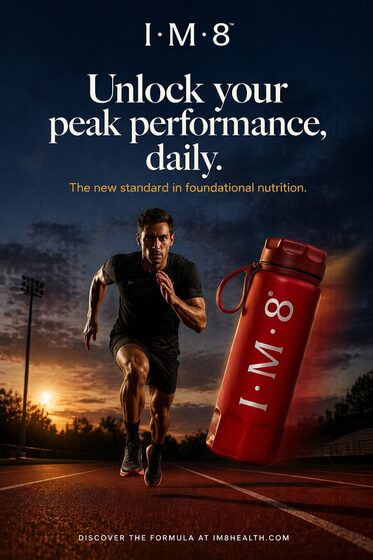
The claim-led static argues with your head. This one goes for the chest. Same brand, same product — a completely different argument, which is exactly the point of testing distinct angles instead of ten crops of one ad.
 123456
- Brand mark first, small. Aspiration ads can afford a quiet logo — identity is carried by color and composition, not a lockup shouting for credit.
- The benefit is the headline. "Unlock your peak performance, daily." Serif again, second person, present tense. No product name in the promise — the reader is the subject of this sentence.
- Positioning line does the category work. The orange subline quietly plants "foundational nutrition" — the rational anchor under the emotional headline.
- A human at maximum effort. The sprinter at dawn is the argument: this is who you are on your best day. Motion + golden hour is the oldest scroll-stopper in sport marketing because it still works.
- The product rides the energy. Angled, motion-blurred, oversized — the bottle borrows velocity from the runner. Product and aspiration share one diagonal line through the frame.
- Low-friction close. No button, just a destination. Aspiration ads often close softer — the CTA's job here is permission, not pressure.
What to steal
Run this next to the claim-led version and you're testing arguments, not layouts: head versus chest, proof versus identity. Whichever wins tells you something about your market no survey ever will.