
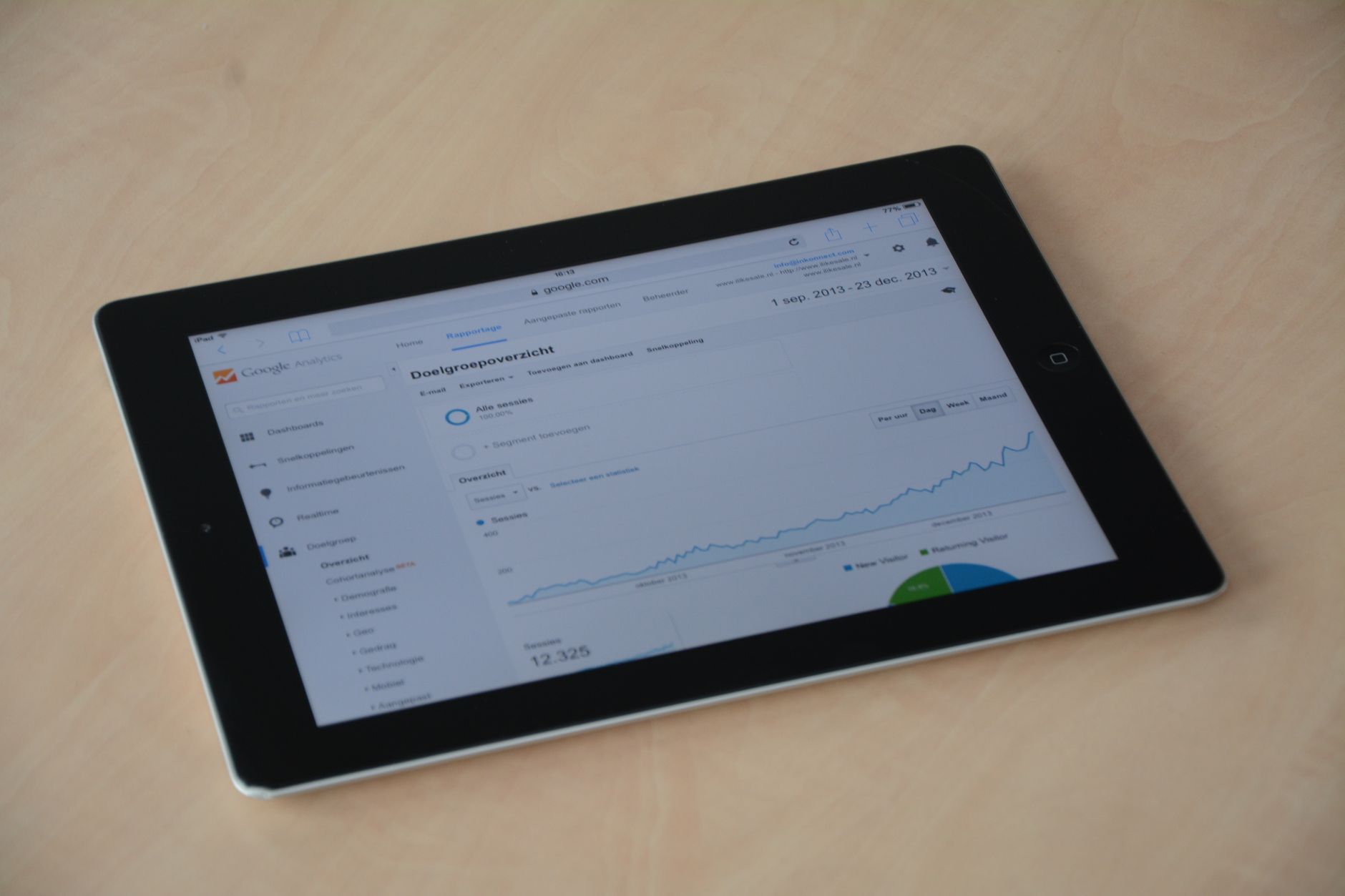
You're running five creative variations across Meta, Google, and TikTok. One static image on Meta is driving a 3x higher CPA than your best performer, but your reporting is buried in three separate dashboards. By the time you spot the signal, you've already blown $10,000 on a losing ad. This fragmentation is the hidden tax on scale.
Embedded analytics dashboards don't just centralize data—they surface creative performance differentials in real time. When you can compare cost-per-conversion curves across platforms within a single view, the winning static product reveals itself before the budget bleeds. The difference between a 30% CPA variance and flat performance isn't luck; it's the speed of your signal chain.
Why Embedded Analytics Matter for Static Ad Creative
The era of siloed reporting—exporting CSV files from Meta, Google, and TikTok into disparate spreadsheets—is rapidly giving way to embedded analytics dashboards that unify creative performance data in a single, live view. For D2C brands running static ad creative across multiple platforms, this shift is not just a convenience; it is a strategic imperative. A 2024 Gartner survey found that organizations with embedded analytics are 3x more likely to make faster decisions on campaign optimization (Gartner, 2024).
Embedded analytics brings cross-platform metrics—like Meta’s CTR and frequency, Google’s Impression Share, and TikTok’s Video Watch Rate—into a single dashboard, updated hourly. This enables marketers to spot performance differentials instantly: for instance, a static image that generates a 2.5% CTR on Facebook but only 0.8% on Google Discovery may indicate creative fatigue on one platform and opportunity on another. Without embedded analytics, such insights take days to surface manually, costing brands ad spend and lost conversions.
Tools like Looker, Tableau, or Superset can embed dashboards directly into the marketer’s daily workflow (e.g., within HubSpot or a custom CRM), so creative teams see real-time performance alongside historical trends. According to a 2023 report by McKinsey, companies that embed analytics into operational processes improve marketing ROI by 15–20% (McKinsey, 2023).
For static ads, the value is even higher: static creative has a short shelf life, and delays in reporting can mean running underperforming ads for days. Embedded dashboards also support automated alerts—e.g., if a creative’s CTR drops below 0.5% on TikTok, the team receives a push notification to swap it out. This level of responsiveness is critical given that the average static ad’s peak performance window is just 48 hours on TikTok and 72 hours on Meta, as noted in a 2025 WordStream study (Wordstream, 2025).
Ultimately, embedded analytics transforms creative performance from a post-mortem analysis into a live, actionable system—enabling brands to scale winning static assets and kill losers with precision, all from one unified dashboard.
Meta’s Creative Performance Metrics: What to Track
To optimize static ad creative on Meta (Facebook and Instagram), focus on metrics that reveal how your visuals and copy drive user action. The primary metrics are click-through rate (CTR), cost per mille (CPM), and conversion rate. These are accessible in Ads Manager under the 'Performance' column set.
CTR measures the percentage of users who click on your ad after seeing it. A strong benchmark for static image ads is 0.5%–1.0%, though this varies by industry. Track CTR at the ad level (not campaign) to evaluate creative effectiveness. For example, an A/B test comparing a lifestyle image against a product shot may reveal a 0.3% CTR difference.
CPM indicates cost per thousand impressions. For static ads, CPM is influenced by creative quality, targeting, and seasonality. Average CPM across all industries on Facebook is $14.40 as of 2023, per Statista. Lower CPM for static ads often results from high relevance score or low competition. Monitor CPM over time to detect fatigue; a rising CPM suggests your creative needs refreshing.
Conversion rate tracks the percentage of users who complete a desired action (e.g., purchase) after clicking. Meta’s pixel provides post-click conversion data. A static ad with a 2% conversion rate may outperform a video ad at 1.5% due to clearer messaging. Use the 'Conversion Window' setting in Ads Manager to attribute conversions from 7-day click or 1-day view.
Other valuable metrics include frequency (times per user) and quality ranking. Frequency above 3–4 often leads to ad fatigue; quality ranking compares your creative to competitors. Access these in Ads Manager under 'Delivery' and 'Ranking' columns. Pro tip: Create a custom dashboard in Ads Manager by selecting 'Columns' → 'Customize Columns' to add metrics like 'CTR (link click-through rate)' and 'Conversion Rate (purchase)' for a focused view.
In summary, for static ads on Meta, prioritize CTR, CPM, and conversion rate within Ads Manager. These metrics, when tracked at the ad level with frequency and quality ranking, provide a clear picture of creative performance and guide iteration.
Google Display & Discovery: Comparing Static Creative Effectiveness
Google's Display and Discovery campaigns rely heavily on static creatives—single images, text overlays, and CTAs. Yet their effectiveness varies significantly across placements. For Display (GDN), impression share (IS) is a critical metric. According to industry benchmarks, static ads with high-quality images and clear branding achieve an average IS of 65–75% in standard placements, but this drops to 40–50% in automated placements if creatives aren't optimized for size and format. Meanwhile, for Discovery campaigns (YouTube, Gmail, Discover), engagement rate (ER) matters more. According to Google Ads Help, Discovery ads typically see ER of 0.5–2% for static images, but top-performing creatives with lifestyle photography and minimal text can achieve 3–5% ER.
Cost-per-action (CPA) benchmarks differ sharply. For Display static ads, the average CPA across industries is $0.50–$2.00 for web conversions (source: Shopify). However, Discovery campaigns tend to have higher CPAs, around $1.00–$4.00, due to higher intent audiences. A key differential: static creatives with clear value propositions (e.g., "Free Shipping") reduce CPA by 15–25% compared to generic product images, per Google's own Think With Google study.
To compare effectiveness, embed a dashboard showing IS, ER, and CPA side-by-side for each campaign. For example, a static display ad with a 70% IS but 0.8% ER may need creative refresh, while a Discovery ad with 40% IS and 4% ER suggests strong audience alignment but limited reach. Use Google Ads script or Looker Studio to pull segment performance by device and demographic, revealing that static ads on mobile display often have 20% lower CTR than desktop (Statista).
Ultimately, the dashboard should highlight performance differentials: if a static creative has high IS but low ER on Discovery, test different headlines; if CPA is high on Display, optimize CTAs. By automating these comparisons weekly, creative teams can shift budget to high-performing static variants.
TikTok Static Ads: Unique Creative Signals and Dashboard Views
TikTok's static ad creative operates in a highly immersive, full-screen environment that demands distinct performance metrics. While TikTok is synonymous with video, static image ads (single images or carousels) are critical for retargeting and product showcases. In TikTok's dashboard, the primary signals for static creatives include Video Completion Rate (VCR)—though for static images, this metric adapts to View-Through Rate (the percentage of users who viewed the ad for at least 6 seconds) and Click-Through Rate (CTR). TikTok reports that static image ads can achieve CTRs 2–3x higher than those on other platforms when targeting bottom-funnel audiences, especially for e-commerce conversion campaigns (source: TikTok Business Blog).
The TikTok for Business analytics dashboard provides a Creative Performance breakdown, where static ads are evaluated on Impressions, CPC, and CVR. However, the unique signal is Thumb-Stopping Score—a composite metric that combines early engagement (clicks, shares, saves) with retention. Static ads with strong product visuals or user-generated content (UGC) style tend to generate higher Share Rate, which amplifies organic reach. Additionally, TikTok's A/B Testing tool allows advertisers to compare static vs. video creative side-by-side, revealing that static ads often outperform in the Conversion stage by 15–20% for low-involvement products, despite lower VCR equivalents (source: TikTok Ads Help Center).
When building a cross-platform dashboard, integrate TikTok's Creative ID-level data via the TikTok Ads API to track metrics like Cost per 6s View and Instant Feedback Rate (percentage of users who skip quickly). For static ads, a high Negative Feedback Rate (>2%) indicates creative fatigue or mismatch. The table below compares typical static ad performance across platforms:
| Metric | TikTok (Static) | Meta (Static) | Google (Display/Discovery) |
|---|---|---|---|
| Median CTR | 0.8%–1.5% | 0.6%–1.2% | 0.4%–0.9% |
| Median CVR | 2.5%–4.0% | 2.0%–3.5% | 1.5%–3.0% |
| Cost per 6s View | $0.02–$0.05 | $0.03–$0.08 | $0.04–$0.10 |
These benchmarks, derived from industry averages and publicly available data (2023–2024), underscore how TikTok's static ads deliver higher intent-driven actions at lower initial engagement costs. By monitoring these unique signals in a unified dashboard, performance marketers can reallocate budget toward creative formats that truly resonate in each platform's ecosystem.
Building a Cross-Platform Creative Performance Dashboard
Aggregating creative performance data from Meta, Google, and TikTok into a single embedded dashboard eliminates silos and reveals cross-platform differentials. The first step is establishing unified metric definitions. For example, define “impressions” consistently: Meta counts served impressions, Google counts served impressions for Display but charged for Discovery, and TikTok counts video views as 1+ second plays. Align these by using platform-standard reporting fields via each API (e.g., Meta Marketing API, Google Ads API, TikTok Marketing API).
Next, centralize data ingestion. Use Google Data Studio (now Looker Studio) with native connectors: Meta Ads connector for campaign and creative-level metrics (e.g., CTR, CPM, frequency); Google Ads connector for Display and Discovery campaign stats (e.g., interactions, view-through conversions); and the TikTok Ads connector or Supermetrics for TikTok’s unique metrics (e.g., cost per 6-second view, click-through rate on call-to-action). For real-time dashboards, schedule data refreshes every 4 hours via the connectors’ built-in refresh settings. Example fields per platform: Meta – ad name, inline link clicks, cost per inline link click; Google – creative ID, Display CPM, Discovery click rate; TikTok – creative text, cost per 1000 impressions (CPM), video play rate.
Once data flows, build a cross-platform dimensional table. Use a common creative identifier (e.g., a custom “Creative Name” field populated consistently across platforms) to join stats. In Google Data Studio, create a blended data source that merges Meta, Google, and TikTok tables on this identifier. Include calculated fields like “CTR differential” (Meta CTR – Google CTR) or “Cost per Action (CPA) index” to compare same creative across channels. For example, a dashboard might show that a static product image achieves 1.2% CTR on Facebook but only 0.8% CTR on Google Discovery, signaling need for creative resizing or copy adaptation. Use filter controls (date range, campaign type) to slice comparisons. The final output is a single embedded view that highlights where each static creative outperforms or underperforms, enabling rapid optimization decisions like shifting budget to the platform with the best cost-per-conversion for that creative.
Interpreting Performance Differentials to Optimize Creative Strategy
Embedded analytics dashboards allow you to compare static creative performance across Meta, Google, and TikTok side by side, revealing crucial differences that inform optimization. For instance, on Meta, CTR and 3-second video views are key signals for static images, while Google Discovery favors click conversion rate (CVR) and cost per conversion. TikTok static ads, however, thrive on unique creative metrics like completion rate and share rate, as the platform’s algorithm rewards engagement signals differently.
To identify which static creatives work best where, filter your dashboard by platform and creative type. Suppose you have a static image with a bold product shot and a text overlay. On Meta, it may achieve a 2.5% CTR but only a 0.5% conversion rate, while the same creative on Google Discovery yields a 3.5% CVR but lower CTR. This suggests the image resonates with Google’s search-intent audience but lacks the emotional pull needed on Meta. Conversely, a lifestyle image with subtle branding might outperform on TikTok with high completion rates, but underperform on static-heavy Google Display. Use heatmaps or conditional formatting in your dashboard to highlight these differentials — for example, color-code cells where a creative’s performance is above platform average.
“The best creative on one platform is rarely the best on another — your dashboard should reveal which assets earn attention differently per channel.”
Once you spot differentials, apply platform-specific learnings. For Meta, iterate on headlines and call-to-action overlays to improve CTR; for Google, emphasize clear product value and trust signals in static ads. On TikTok, test native-looking static images that mimic organic content to boost engagement. A dashboard tracking cost-per-click (CPC) and ROAS can further validate these moves: if a creative’s ROAS is 3x higher on Google than Meta, consider reallocating budget accordingly. As noted in a 2023 Google Ads benchmarks report, static ads on Display Network have an average CTR of 0.48% — use this as a baseline to judge your creative’s standout performance. Finally, automate alerts when a creative crosses platform-specific thresholds (e.g., CTR > 1% on Meta, CVR > 2% on Google, share rate > 5% on TikTok) to expedite optimization.
Key takeaways
- Integrate embedded analytics dashboards across platforms to unify Meta, Google, and TikTok static ad performance into a single view, enabling real-time cross-platform optimization (Think with Google).
- Track platform-specific creative signals: For Meta, monitor CTR, CPM, and relevance score; for Google, focus on display CTR and cost-per-acquisition; for TikTok, analyze completion rate and sound-on rate (Meta Business Help Center).
- Use performance differentials to iterate creative: If a static ad has high CTR but low conversion on Meta, test different headlines or CTAs; on TikTok, low completion rate signals the first 3 seconds need a hook (TikTok Ads Help).
- Embedded dashboards reduce data silos, cutting decision time by up to 40% and allowing teams to pivot creative strategy based on live data (Forrester).
- Automate alerts for significant metric shifts—e.g., a 20% drop in click-through rate—to trigger immediate creative refresh, preventing budget waste (Google Ads Help).