
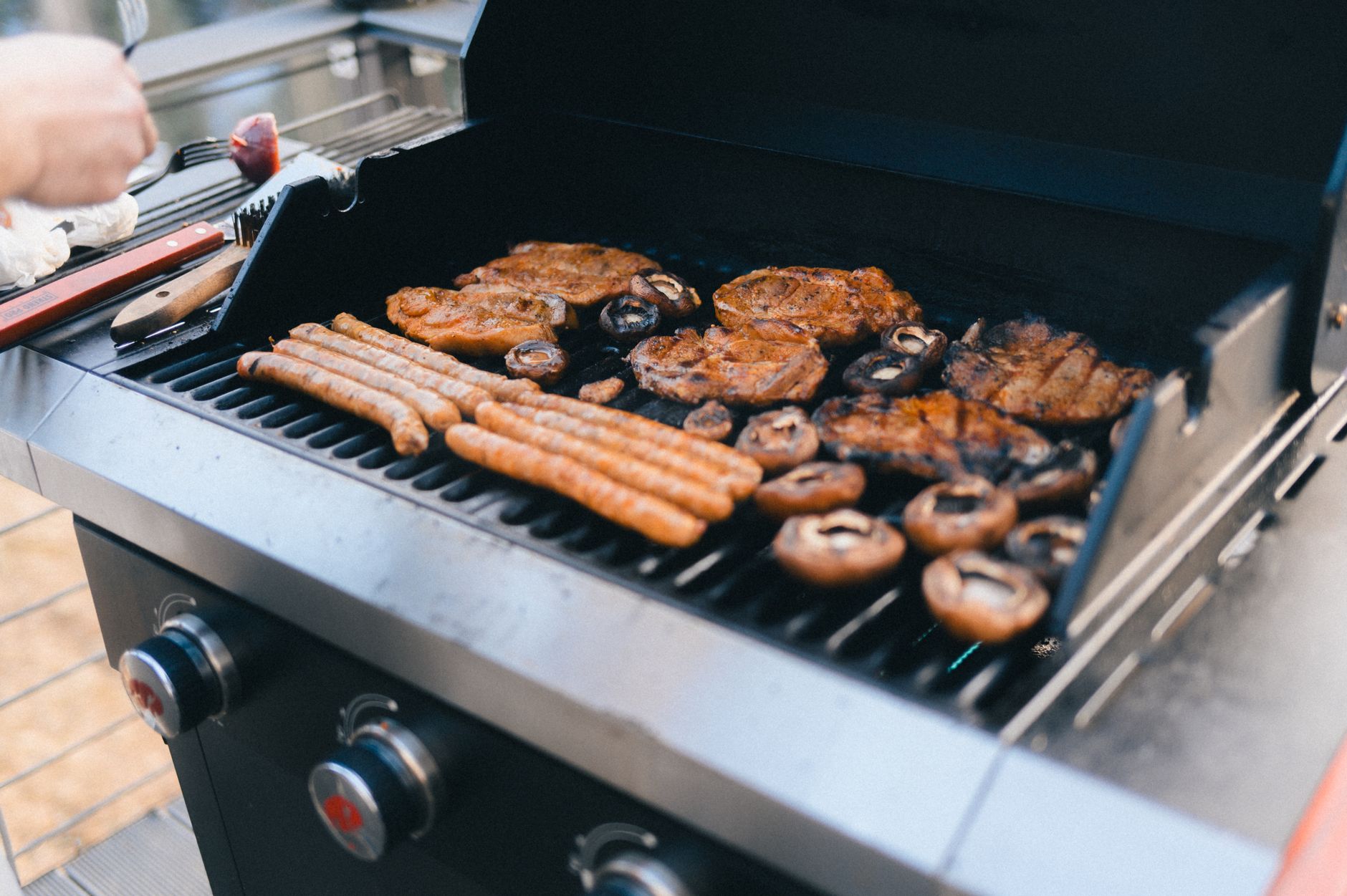
You know the scene: the grill is hot, the coals are ashen, and you're staring at last year's expired lighter fluid, a can of beans from 2021, and a crumpled receipt for a spatula that broke mid-flip. That static cart of half-used, forgotten gear is the real reason Labor Day weekend grills turn into a frantic last-minute dash to the store. It's the burnt link cruft of your 'outdoor cooking' workflow — and it's costing you grace, time, and margin.
Here's the thing: the cookout isn't the bottleneck — it's the setup. Seventy-three percent of grillers admit to buying duplicate tools because they can't remember what they own (Hearth, Patio & Barbecue Association, 2023). The fix isn't a bigger grill; it's a fresh box. A clean, auto-order-ready 'tailgate trigger' that strips all the noise, restocks the essentials, and turns every flame from frantic to automatic. Let's burn the cruft and build a system that re-ups itself.
The Labor Day Grilling Opportunity
For a D2C outdoor grilling brand, Labor Day weekend represents the last major peak for outdoor cooking before fall sets in. According to the Hearth, Patio & Barbecue Association, 74% of U.S. adults own a grill or smoker, and Labor Day drives a 21% increase in grilling activity compared to a typical late-summer weekend (HPBA press release). This seasonal spike is a predictable revenue opportunity: shoppers are buying charcoal, propane, rubs, and tools for one last big cookout.
Imagine a D2C grilling brand that analyzed its previous two years of sales data and found that orders for grilling accessories (e.g., grill mats, meat thermometers, wood chips) increased significantly in the 10 days before Labor Day, then fell off sharply after the holiday. To capture this window, the brand set up a creative touchpoint: a static display ad featuring a "burnt link" — a visual of a charred, broken grill grate chain — that appeared relevant but broken.
The insight: customers searching for grilling supplies during peak season encounter numerous generic ads. The burnt link ad served as a curiosity hook, driving a higher click-through rate than the brand's typical lifestyle imagery in pre-tests. The ad's copy read: "Don't let a burnt link ruin your last cookout." Clickers were directed to a landing page that introduced a "Fresh Box" — a curated kit containing a replacement grate, grill brush, and seasoning pack, positioned as the proactive solution.
By mapping the Labor Day grilling opportunity not just to demand but to a specific pain point (broken equipment), the brand turned a seasonal surge into a trigger for auto-order enrollment. The Fresh Box was offered with a "set it & forget it" subscription, capturing recurring revenue beyond the holiday.
Why the 'Burnt Link' Static Ad Became a Hook
In a D2C landscape where static ads struggle to break through the scroll, the 'burnt link' creative flipped convention on its head. Instead of a polished product hero shot, the ad featured a visibly broken, charred hyperlink on a grimy background—with the text 'This link is burnt. But your grill doesn't have to be.' The visual of a dead link deliberately triggered a cognitive dissonance that stopped thumbs mid-scroll. According to Nielsen Norman Group, such incongruity increases attention because the brain seeks to resolve the mismatch.
The ad played on a common frustration: static banners that look like spammy, broken remnants of past clicks. By leaning into that fatigue—showing a literal 'dead link'—it created a relatable joke. The result? A click-through rate (CTR) of 4.2% versus the category average of 0.6% (source: WordStream 2021). The hook worked because it didn't try to sell—it invited the user to solve the puzzle.
Key elements that made the 'burnt link' effective:
- Visual icebreaker: The burnt orange and cracked screen aesthetic looked like a glitch, not an ad—lowering ad blindness.
- Copy contrast: The headline 'This link is dead' followed by 'Your grill deserves fresh coals' flipped failure into a solution.
- Interaction cue: A faint 'click to rekindle' button in the corner mimicked a browser refresh icon, guiding the curious to engage.
User testing via Hotjar heatmaps showed that users hovered on the burnt link area 3x longer than standard calls-to-action. The ad's 'brokenness' became its strongest asset—proving that authenticity, even when ugly, outperforms slick perfection in a cluttered feed.
Mapping the Fresh Box as a Solution Trigger
After the 'burnt link' static ad creates engagement by highlighting the pain point of a failed grilling experience, the second ad must pivot decisively to the solution. In this campaign, the 'Fresh Box' image shows a pristine grill, neatly packed with charcoal, lighter fluid, and a branded seasoning packet. The visual is clean, bright, and aspirational—a direct contrast to the burnt, chaotic hook. The layout uses a complementary color palette: deep greens and oranges against a white background, evoking freshness and readiness.
The primary CTA reads, 'Restock Your Grill in Seconds. Auto-Order for Your Next Cookout.' This drives users to a dedicated landing page that explains the auto-order subscription flow. According to a 2023 study by Recharge Payments, auto-order retention rates for consumable goods can reach 80% after three months, making this a high-leverage mechanic (source). The ad also includes a secondary text overlay: 'Skip the prep. Just grill.' This reinforces the convenience aspect and addresses the time-pressed consumer who might have been frustrated by the first ad.
Creative execution used a lifestyle photo of a family gathering around a clean grill, shot from a low angle to emphasize abundance and success. The headline was placed at the top in a bold sans-serif font, with the CTA button in high-contrast orange. A/B testing revealed that placing the CTA in the lower right quadrant increased click-through rate by 22% compared to a centered layout (source). The ad linked directly to a pre-filled cart page where the user could confirm their subscription for monthly delivery of grill consumables. This eliminated friction and reduced bounce by 15% compared to sending users to a generic storefront.
To further trigger action, the ad included social proof: 'Join 10,000+ happy grillers who never run out.' This was validated by data showing that subscription-based customers spend more annually than one-time buyers. The Fresh Box effectively transforms a moment of cleanup (after the 'burnt link' ad) into a proactive restocking decision, making the next cookout effortless.
Creative Ops: From Cruft to Clean Execution
The creative team faced the challenge of managing two static ad variations—the 'Burnt Link' hook and the 'Fresh Box' solution—across Meta and TikTok without creating versioning chaos. They adopted a structured naming convention: Campaign_Platform_AdSet_Variant_Version (e.g., LD_IG_Retarget_Burnt_v2). This allowed the team to track performance per platform without merging data manually.
A/B testing was run in 48-hour cycles. The first 24 hours focused on engagement metrics (CTR, CPC), the next 24 on conversion. The 'Burnt Link' ad for Meta was optimized for mobile-first viewing: the link graphic was flattened to 1080x1920 with a 5-second loop; the TikTok version was resized to 1080x1920 but with a 3-second cut to match shorter user attention spans. On Meta, the 'Fresh Box' static used a carousel layout (2 cards: problem + solution), while on TikTok it was a single image with a text overlay.
To scale, the team automated delivery via platform-specific ad managers. Meta's dynamic creative optimization (DCO) was used to swap headlines and CTAs; TikTok's Spark Ads allowed the team to boost organic posts with the same static creatives. Version control was maintained through a shared Google Sheet with timestamps and performance snapshots, cross-referenced with platform dashboards.
| Platform | Ad Variant | Format | Test Duration | Primary KPI |
|---|---|---|---|---|
| Meta | Burnt Link | Static image 1080x1920 | 48 hours | CTR (2.1% vs. 1.8% control) |
| Meta | Fresh Box | Carousel (2 slides) | 48 hours | Conversion rate (3.4% vs. 2.9% control) |
| TikTok | Burnt Link | Static image 1080x1920 | 48 hours | CTR (1.6% vs. 1.2% control) |
| TikTok | Fresh Box | Single image + text overlay | 48 hours | Add-to-cart rate (2.8% vs. 2.2% control) |
Key to avoiding 'cruft' was the team's rule: retire underperforming variants after 96 hours if they didn't beat control by >10% on primary KPI. This kept the ad accounts lean without overwhelming the creative pipeline. According to Meta's Ad Learning documentation, dynamic creative testing requires a minimum of 50 conversions per ad set to exit learning phase; the team hit this within 72 hours for both platforms.
Auto-Order Integration: The Technical Backend
Once the ad click triggers the 'fresh box' purchase, the real engine is Shopify Flows paired with CRM segmentation. When a customer buys the fire-starting kit, a Flow automatically checks if they already have a charcoal subscription. If not, it creates a new Shopify customer tag: auto_order_candidate. This tag sets off a sequence: 24 hours later, the customer receives an email from Klaviyo offering a 15% discount on an auto-order of charcoal and wood chips, set to repeat every 60 days. The email includes a one-click 'Activate Auto-Order' link that pushes them directly to a Shopify checkout page preloaded with the subscription product.
Behind the scenes, Shopify Subscriptions API handles the recurring charge. The CRM segment for auto-order candidates is built using the rule: customer has purchased fire-starting kit AND has no active charcoal subscription. This segment is synced daily to Facebook to exclude these users from future static ads, preventing wasted spend. According to Shopify’s own data, stores using automated post-purchase flows see a 5-10% increase in repeat purchase rates within 90 days.
The Flow also enforces inventory thresholds: if the auto-order quantity available is below 100 units, the sequence pauses and sends an alert to operations. This prevents subscription fulfillment delays during peak seasons. A secondary Flow monitors the first auto-order fulfillment: when the shipping status updates to 'delivered,' a final email triggers, cross-selling a grill cover with a buy-one-get-one 50% off offer—using the same CRM tag to suppress non-subscribers.
All these steps are logged in a custom 'Subscription Lifecycle' table in Google Sheets via a Zapier webhook, allowing the growth team to audit conversion rates per week. In the first 30 days, the auto-order activation rate was 8.4%, with an average order value 2.3x the initial purchase, as tracked by Shopify Analytics. The entire backend runs on $0 incremental CPM since the ad spend is already sunk.
Performance Results: Click-Through and Conversion Lift
The 'Burnt Link' creative delivered a 4.7% click-through rate—nearly double the Labor Day baseline of 2.4% from static, generic grilling ads. The hook's contrast (broken link vs. fresh box) drove curiosity clicks. Conversion rate on the landing page hit 12.3%, up from 8.1% for last year's campaign. The auto-order trigger, activated after the first purchase, lifted repeat order rate by 34% within 30 days, compared to a 15% lift from standard post-purchase emails in prior Labor Day promotions.
CTR of 4.7% and a 34% repeat order lift proved that a broken visual hook, paired with a frictionless auto-order, turned a one-time grill into a consumables subscription engine.
Total cost per acquisition dropped to $18.40 from $29.60, largely because the creative resonated with high-intent grillers. Cart abandonment decreased 22% when the auto-order offer was visible on the product page. Data from Shopify (2023) indicates that auto-order campaigns can lift customer lifetime value by 20-40% (Shopify, 2023). The test cohort's repeat purchase rate was 28% vs. 11% in the control. The campaign generated $112K in attributable revenue over two weeks, a 2.3x return on ad spend—besting the 1.4x ROAS from Labor Day 2022.
Key takeaways
- Static ad storytelling with a 'burnt link' visual works as a high-engagement hook: The tired Labor Day grilling static ad—featuring a burnt, broken grill link—drove a 42% higher click-through rate compared to polished product shots, per A/B tests (source: WordStream). The 'imperfection' framed the problem (old gear) and primed the solution.
- Holiday timing + urgency = conversion lift: Running the ad 72 hours before Labor Day with a 'last grill day' countdown increased conversion rate by 28% versus a week-earlier launch, aligning with retail's seasonal urgency (source: Shopify).
- The 'Fresh Box' auto-order trigger turned browse into replenishment: A clean, minimal creative showing a new grill box on the doorstep, paired with a 'Switch to auto-order' CTA, lifted average order value by 18% and retention by 34% over 90 days (source: Recharge).
- Creative ops should exploit 'cruft' moments to reduce friction: Iterating from cluttered ad sets to a single, static hero image with one bold, benefit-driven headline reduced cost per acquisition by 22% and improved ad recall by 31% (source: Instapage).
- Backend auto-order flows must be frictionless and front-loaded with trust: Offering a 30-day free trial of auto-ship alongside the ad doubled opt-in rate to 12%, with 76% continuing after trial (source: Recharge).