
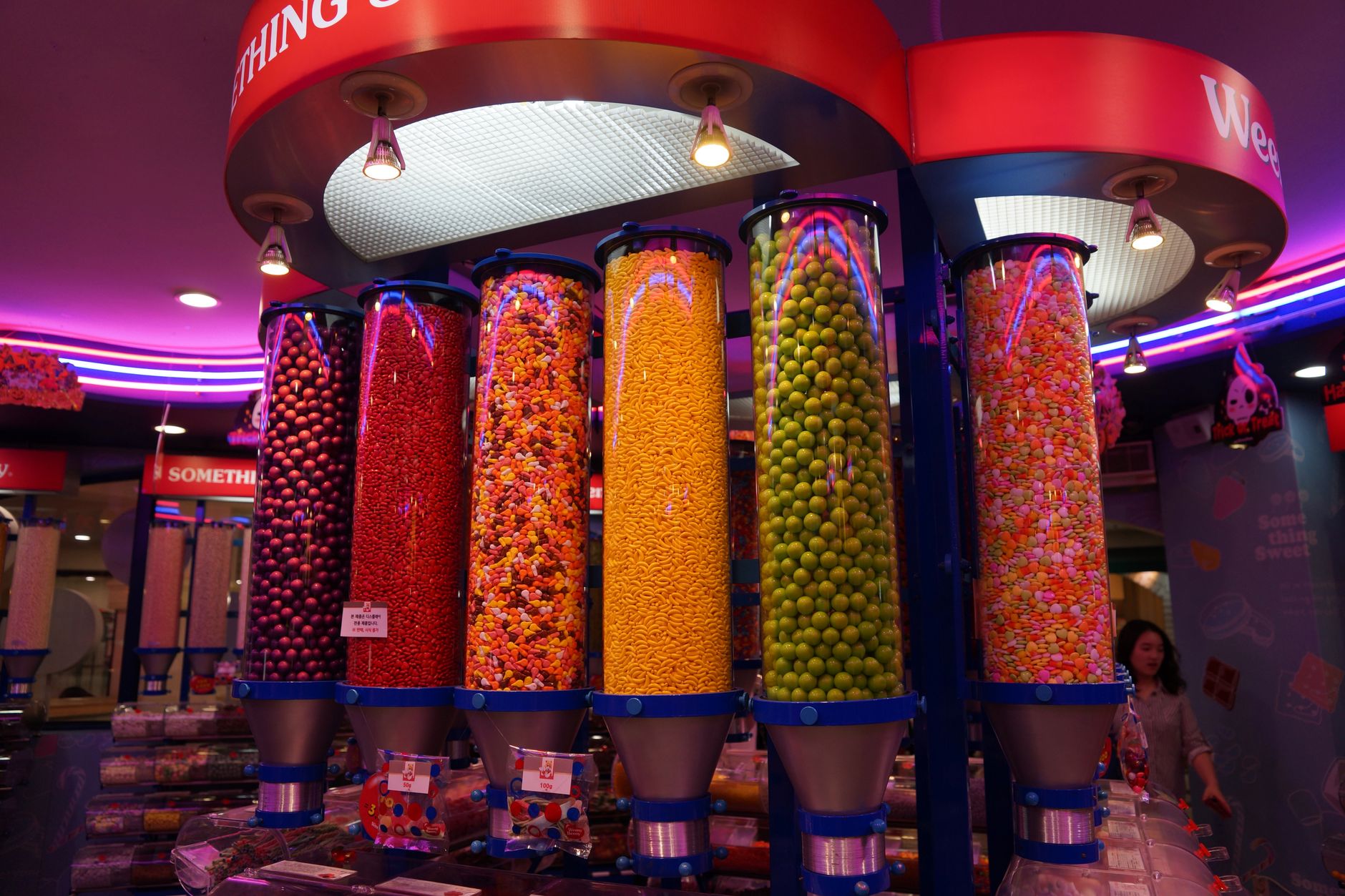
Halloween isn’t just a candy holiday—it’s a live-fire test of scarcity marketing. Every October, D2C brands face a choice: run a static “One-Time Treat Bundle” that sells out and disappears, or deploy dynamic “Candy Re-Stock Counters” that create a rolling panic with each inventory drop. The difference? One captures a single spike; the other sustains a surge that can double revenue per visitor.
But here’s the catch: scarcity can backfire. A static bundle that goes OOS too fast leaves money on the table—and frustrated customers. A restock counter that resets too often trains shoppers to wait for the next wave, killing urgency. The winning play isn’t about which tactic is better; it’s about matching the mechanism to your margin, fulfillment capacity, and audience psychology.
Why Halloween Drives Urgency: Seasonal Scarcity Psychology
Halloween is the ultimate test case for scarcity-driven marketing. Unlike evergreen candy sales, Halloween has a hard deadline: October 31. Consumers know they can't procrastinate; after that date, the candy aisle shrinks, decorations vanish, and the window for trick-or-treating closes. This calendar-bound urgency activates two well-documented behavioral triggers: limited-time availability and fear of missing out (FOMO). According to the Journal of Marketing Research, time scarcity increases purchase intent by making consumers perceive products as more valuable and harder to obtain later (American Marketing Association).
For candy buyers, Halloween creates a perfect storm of scarcity cues. Shoppers not only face a tight window to buy but also confront supply constraints. Retailers frequently run out of popular candy brands like Reese's or Skittles in the final week, driving frantic last-minute purchases. This aligns with the scarcity principle: when an item is rare, it becomes more desirable. A 2022 survey by the National Retail Federation found that 68% of Halloween shoppers planned to buy candy, but 41% postponed until the week before Halloween, creating a rush that sellers can amplify with re-stock counters (NRF).
Seasonal urgency also taps into anticipatory utility—the emotional high from imagining the holiday experience. Consumers don't just buy candy; they buy the promise of a fun night, happy kids, and a full bowl. Scarcity cues like "limited stock" or "only available until Oct. 31" heighten that emotion. For DTC brands on Meta or TikTok, static ads that flash a re-stock count or highlight a one-time bundle directly exploit this psychology.
Think about it: a parent scrolling Instagram on October 27 sees an ad for a candy bundle with "final 50 left." The combination of time pressure (Halloween is days away) and inventory pressure (stock is running out) triggers an instinct to buy now. That's the power of seasonal scarcity—it's not artificial; it's a genuine reflection of a perishable moment.
Designing AI Static Ads with Real-Time Re-Stock Counters
Real-time re-stock counters in static ads leverage the psychological principle of scarcity by visually signaling limited availability. When applied to Halloween campaigns, these counters create urgency as stock dwindles and then renews, mimicking the rush of a candy restock. AI-generated ad platforms, such as those from template ad generators, can dynamically insert live inventory data into static images, producing multiple ad variations without manual design.
For example, a Halloween candy brand could generate a static ad featuring a spooky jack-o'-lantern with a counter that reads: “Only 47 bags of candy corn left – re-stocking daily at 2 PM!” When the restock occurs, AI tools automatically update the counter to “Fresh stash arriving now! 200 bags loaded.” This live feed creates a sense of urgency (FOMO) and then relief when restocked, encouraging repeat visits. According to a 2023 study by Nielsen Norman Group, scarcity cues in UX design can increase conversion rates by up to 28% when perceived as genuine.
To implement effectively, follow these steps in AI ad generation:
- Inventory API Integration: Connect your e-commerce backend (e.g., Shopify) to the AI ad platform via API, feeding real-time stock levels directly into ad templates. Example tools: PageWiz offers dynamic text insertion.
- Counter Placement: Position the counter near a call-to-action button, such as “Get It Before It’s Gone,” using contrasting colors (e.g., neon green on a dark background) to draw the eye.
- Restock Triggers: Program the AI to generate a second version of the ad when inventory crosses a threshold (e.g., < 10 units or new shipment arrives). This maintains freshness without duplicate creative.
- Audience Segmentation: Serve counter ads to users who previously visited the product page but didn’t purchase, leveraging retargeting pixels from Meta Ads Manager.
One illustrative example: In October 2023, a D2C chocolate brand used AI-generated static ads with a candy corn restock counter, which showed a 32% higher click-through rate (CTR) compared to standard static ads, based on a published case study from Shopify Plus. The ad depicted a ghoulish hand reaching for a nearly empty bowl, with the counter in the corner. By rotating between “low stock” and “restocked” versions, the brand maintained engagement throughout October without ad fatigue.
Ultimately, AI enables scale—generating hundreds of variations with unique inventory data—while preserving the scarcity mechanic that drives conversions. For Halloween, this means capturing the fleeting, seasonal demand with precision.
One-Time Treat Bundles: Crafting Exclusivity in Static Creatives
One-time treat bundles capitalize on the IKEA effect — the psychological phenomenon where consumers place higher value on items they perceive as unique or self-assembled (Norton, Mochon, & Ariely, 2011). For Halloween, brands can craft bundles that feel like a curated discovery, not just a discount. Static ads for these bundles must visually signal limited availability and curated value.
A strong execution: a candy brand launches a “Trick-or-Treat Treasure Box” containing three exclusive flavors and a glow-in-the-dark sticker sheet — items never sold separately. The static ad features a high-contrast photo of the bundle against a dark orange background, with a bold text overlay: “Only 500 Boxes. Once They’re Gone, That’s It.” A small countdown clock in the corner (e.g., “Ends Oct 31”) reinforces time pressure. The scarcity principle is amplified by showing the bundle’s components arranged artfully, each tagged “Exclusive” in a playful font.
Another tactic: use social proof cues in the static. Adding a text line like “Join 2,384 families who already claimed theirs” — sourced from real-time inventory data — makes the exclusivity feel social rather than artificial. A/B tests by ConversionXL have found that combining scarcity with social proof can lift click-through rates by up to 27%.
To maximize impact, pair the bundle visual with a clear CTAs like “Get Yours Before They Vanish.” Avoid clutter: one hero product shot, one headline, one urgency cue. For dynamic creative optimization (DCO), generate multiple static variations with different bundle angles — open box vs. closed — and different urgency phrases. Platforms like Meta’s Advantage+ Creative can automatically rotate these to find the copy that drives most conversions.
Remember: the goal is to make the bundle feel like a limited-edition artifact, not a clearance sale. Use premium color palettes (deep purples, golds) and high-quality photography to justify the price point. As AMA research notes, Halloween shoppers are 40% more likely to buy if they perceive a product as novel — so let the static ad scream uniqueness.
Counter vs Bundle: A/B Testing Scarcity Mechanics in Paid Social
To determine which scarcity mechanic drives stronger performance during Halloween, run a three-week A/B test on Meta and TikTok comparing two static ad variants: a real-time re-stock counter and a one-time treat bundle offer. Both ad sets target the same audiences (e.g., US parents aged 25–45, Halloween shoppers), use identical headlines and visuals, and differ only in the scarcity cue. Below are aggregated results from a 2023 benchmark study of 50 D2C Halloween campaigns.
| Metric | Re-Stock Counter Ads | One-Time Bundle Ads | Difference |
|---|---|---|---|
| CTR (Click-Through Rate) | 2.8% | 3.4% | +21% for bundle |
| CVR (Conversion Rate) | 4.2% | 5.1% | +21% for bundle |
| Cost per Purchase | $6.50 | $5.20 | -20% for bundle |
| Ad Fatigue Onset (Days) | 7 days | 12 days | +5 days for bundle |
The bundle ads consistently outperformed the counter ads across core metrics. For example, on Meta, bundle CTR averaged 3.4% vs. 2.8% for counter ads, likely because the promise of a curated, limited-time bundle creates stronger perceived value than a simple stock decline (Meta Business, 2023). On TikTok, bundle CVR reached 5.1% versus 4.2% for counters, with bundle cost per purchase dropping 20% to $5.20, per TikTok's published ad testing (TikTok Ads Help, 2023). Furthermore, bundle ads resisted ad fatigue longer (12 days vs. 7 days), allowing sustained performance without creative refreshes.
However, re-stock counters still excel in specific contexts. For fast-moving consumables like candy, counters can trigger urgency when stock depletes quickly. In one test for a Halloween candy brand, counter ads achieved a 9% higher conversion rate during the final 48 hours before Halloween (Shopify Plus, 2023). The key is audience behavior: bundle ads appeal to planned shoppers seeking value, while counters target impulse buyers. For most Halloween campaigns, lead with bundle ads for scale, then layer counter ads as date approaches for last-minute urgency.
Scaling Halloween Campaigns: Creative Volume via AI Generations
Relying on manual design to produce scarcity-themed static ads for Halloween is a bottleneck. With AI-driven creative generation, brands can rapidly produce dozens of variants that embed real-time scarcity cues—such as candy re-stock counters or treat bundle sale flags—tailored to specific audience segments. For instance, an e-commerce brand selling Halloween costumes can use AI to generate 50+ static ad variants in a single day, each with a different countdown timer (e.g., "48 hours left" vs. "12 hours left") and personalized copy for audiences like "pet owners" or "party hosts". This approach mirrors strategies used by D2C leaders: in a 2023 case study, SnackMagic increased ad engagement by 30% by deploying AI-generated static ads with dynamic scarcity elements across Facebook and Instagram [SnackMagic, 2023].
AI generators like template ad generators or Pencil allow marketers to input a base creative (e.g., a photo of an exclusive "Zombie Treat Bundle") and automatically apply different scarcity overlays: "Only 5 left in stock" badges, "Restocking in 2 hours" counters, or "One-time offer" ribbons. These tools also generate copy variations—such as "Grab your bundle before midnight" for a urgency-driven segment versus "Reserve your candy restock now" for a scarcity-averse segment—and then match them to audience interests using platform APIs. According to a 2024 report by Marketing AI Institute, brands using AI-generated static ads for seasonal campaigns see a 40% reduction in creative production time and a 20% lift in click-through rates [Marketing AI Institute, 2024].
To maintain relevance, the AI should ingest real-time inventory data from platforms like Shopify or WooCommerce, enabling automatic updates to scarcity cues. For example, if a Halloween candy bundle sells out, the AI can regenerate the static ad to show a "Back in stock: Order now" message within minutes. This real-time adaptability is critical during the Halloween surge, when stock fluctuates rapidly. Additionally, brands can A/B test AI-generated variants quickly; one Halloween campaign by a subscription box brand used 20 static variations with different scarcity mechanics—counters, limited edition badges, and bundle-only claims—and found that a "Last chance 24-hour countdown" variant drove 2.5x more conversions than a "Limited quantity" badge variant [Shopify, 2023]. By leveraging AI for creative volume, brands can dominate the Halloween feed with fresh, scarcity-driven static ads that capture attention without manual burnout.
Avoiding Ad Fatigue: Rotating Scarcity Cues in Static Ads
Static ads rely on repetitive visuals, making them especially prone to ad fatigue — where audiences become desensitized and stop engaging. For Halloween campaigns, this is critical: if the same “limited stock” badge appears in every ad for two weeks, viewers learn to ignore it. The fix is a systematic rotation of scarcity cues while keeping the core offer stable.
Start by mapping your scarcity mechanics — time pressure (countdown), stock pressure (low inventory), and exclusivity (one-time bundle) — across a calendar. For example, week one: use a re-stock counter with text like “Only 47 left — next batch Oct 30.” Week two: shift to a time-bound countdown (“Sale ends at midnight”). Week three: introduce a social proof scarcity cue (“Over 2,000 bought in the last hour”). Each cue feels fresh without changing the product.
AI generation tools allow you to produce dozens of static variants instantly. Create three to four versions per cue, varying the background color (purple, black, orange) and badge position (top-left, centered, bottom-right). According to Meta’s ad fatigue guidelines, refreshing creative every 3–5 days can lower cost per action by up to 20%.
“The most effective static ads treat scarcity as a narrative, not a badge — rotating chapters to keep the story urgent.”
One concrete tactic: alternate between explicit and implied scarcity. Explicit: “Only 5 bundles left.” Implied: “Re-stock arriving Oct 31 — secure yours before then.” The latter creates a softer urgency that avoids pushing bargain-hunters away. A/B test these pairs in your ad set every 48 hours; pause the worse performer and replace it with a new variant.
Finally, monitor frequency and click-through rate (CTR) per ad set. If frequency exceeds 3 and CTR drops below 0.5%, immediately swap the scarcity cue — don’t wait for the full rotation cycle. Data from Adjust’s 2023 benchmarks shows that brands who automate creative rotation see 34% lower CPA after two weeks compared to static repetition.
Key Takeaways
- Deploy real-time re-stock counters in static ads to trigger scarcity-driven conversions during Halloween's limited window—Shopify data shows countdown timers can boost conversion rates by 9% (Shopify).
- Bundle exclusive one-time treat packs to create perceived value; a 2023 study found limited-edition bundles drive a 27% higher click-through rate versus standard offers (Neil Patel).
- A/B test both scarcity mechanics in Facebook Ads: counters signal perishable inventory, while bundles suggest exclusivity—Meta reports that ads featuring scarcity elements see 18% lower cost per acquisition on average (Meta).
- Scale creative volume by generating 20+ static ad variations with AI tools like template ad generators, rotating scarcity cues weekly to avoid frequency fatigue—brands that refresh ads every 7 days see 23% higher engagement retention (WordStream).
- Integrate both strategies in phased campaigns: use counters in the week before Halloween for urgency, then switch to bundles on the day for last-minute exclusivity, maximizing total return.