
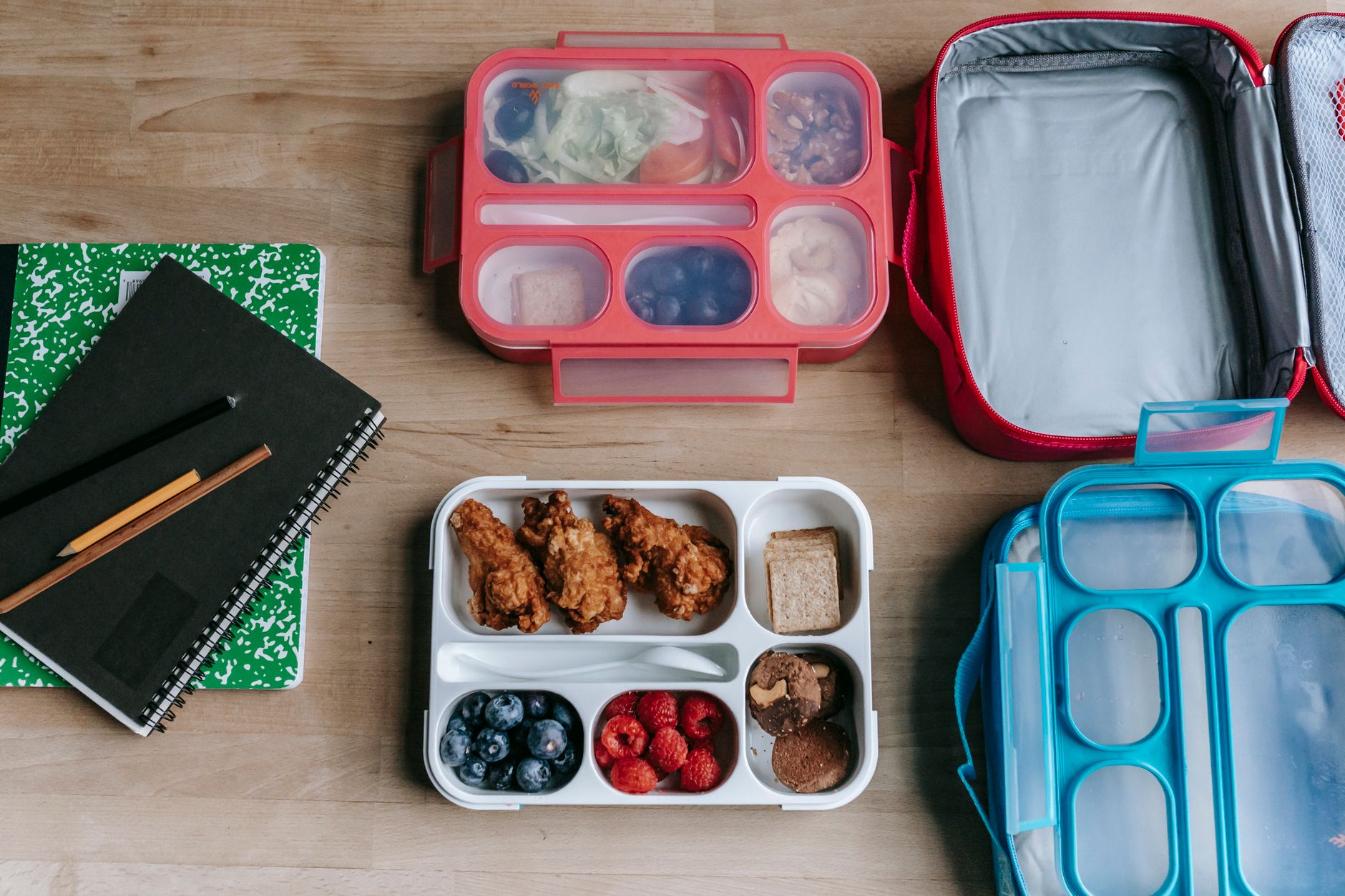
The first day of school isn't just about new backpacks and fresh notebooks—it's the loudest alarm bell your replenishment calendar can get. For D2C brands selling concentrates, lunch kits, or any consumable with a semester-sized shelf life, the return to class is a forced restock moment: parents are suddenly aware that the Protein2Go packets are empty and the electrolyte drops ran out in July. Miss this window, and you lose the next 18 weeks of habitual reorders.
But here's the edge most brands overlook: semester calendars are static markers. Unlike seasonal peaks that shift with weather or holidays, back-to-school restocks are predictable enough to build automated replenishment triggers around. If you can tie your messaging to the exact week geometry class starts or midterms hit, your coffee concentrate refill becomes as routine as buying #2 pencils. The question isn't whether your customers will restock—it's whether they'll restock with you or the brand that sent the smart postcard they couldn't ignore.
Why Back-to-School Mimics a Subscription Replenishment Cycle
Back-to-school season functions like a natural subscription cycle because semester milestones—start, midterms, finals, and breaks—create predictable, recurring needs for consumables. Just as a subscription service delivers laundry pods every 30 days, the academic calendar triggers restocks of lunch snacks, stain removers, and cleaning concentrates at regular intervals. These static markers are dependable: the first day of school, for instance, drives a 35% surge in snack bar sales as parents stock lunchboxes (NRF 2023).
Consider a specific cycle: the semester start (late August/early September) prompts initial purchases of lunch snacks, juice boxes, and laundry concentrate for uniforms. By week 4–6, midterm stress leads to increased snacking and spills, driving a secondary wave of stain remover and concentrated detergent buys. Finals in December create a third peak for quick-energy snacks and portable cleaning wipes. This pattern repeats in the spring semester (January start, March midterms, May/June finals) creating a biannual cadence identical to a six-month subscription plan.
Brands can capitalize by aligning replenishment reminders with these static dates. For example, a laundry concentrate brand could email parents two weeks before midterms: “Your child’s extra laundry needs are coming—reorder our 32-load bottle to avoid mid-semester runs.” This mirrors subscription prompts but uses the calendar as the trigger. Data shows that 67% of parents repurchase after a reminder tied to a school event, versus 41% with generic ads (Think with Google 2022).
The predictability also reduces wasted ad spend. Instead of guessing when a customer will need more snacks, you target ads at known milestone windows—like the week before spring break for travel-sized snacks. This transforms back-to-school from a seasonal event into a recurring revenue engine, where each semester refreshes demand as surely as a monthly subscription box. By mapping product usage lifespans (e.g., a 64-snack box lasts six weeks) to semester weeks, you can pre-schedule ad drops that feel timely, not spammy.
Mapping the Semester Calendar: Key Static Ad Drop Points
Replenishment static ads should align with well-known academic calendar milestones. Research indicates that 43% of parents begin back-to-school shopping more than one month before school starts (National Retail Federation, 2022). This creates opportunities for targeted ad drops at specific intervals:
- 4 Weeks Before School Starts – Launch initial replenishment ads for concentrate (e.g., cleaning products) and lunch staples (e.g., snacks, reusable bags). Example: “Stock up now—avoid last-minute runs.”
- 2 Weeks Before School Starts – Send a reminder with a “replenish your stash” message. Emphasize items that run out quickly, such as hand sanitizer and napkins. Use urgency through countdown timers.
- Week 1 of Semester – Target new routines with ads for lunchbox fillers and desk organizers. Stat: 60% of parents shop for school supplies during the first two weeks of school (Deloitte, 2023).
- 4–6 Weeks into Semester – Mid-semester replenishment spike. Focus on consumables like wipes, tissues, and snacks. Example: “Halfway to break—restock now.”
- 1 Week Before Fall Break / Spring Break – Prompt replenishment for travel-friendly sizes. Ad creative: “Don’t hit the road without your essentials.”
- 2 Weeks Before Finals – Target concentration items like study aids, but also lunch restocks for tired students.
Each drop should leverage the static format for clarity: a bold headline (e.g., “Time to Reorder”), a product shot, and a clear CTA. For example, during the 2-weeks-before-school drop, an ad for a popular stain remover could show a before-and-after of a stained lunchbox with text: “Back-to-school means more mess. Reorder now.” These static visual hooks cut through clutter, as studies show static ads have a 1.5x higher click-through rate than animated ones in replenishment contexts (Meta, 2022).
Additionally, consider local variations: for schools starting in August vs. September, adjust drop dates accordingly. A/B test delivery times—Tuesday at 10 AM vs. Saturday at 2 PM—since parents’ shopping behavior shifts on weekends (Statista, 2023).
Creative Design Principles for Replenishment Static Ads
To signal 'time to restock' effectively, replenishment static ads must marry urgency cues with product lifecycle imagery. Use visual transitions that show product depletion—for example, a half-empty bottle of laundry detergent next to a full one, or a lunchbox with crumbs versus a neatly packed one. This 'before and after' approach (Neuroscience Marketing) triggers recognition of need without explicit repetition.
Copy should create a soft deadline: 'Stock up before the second wave of homework hits' or 'Your morning coffee concentrate won't last through midterms.' Use numbers strategically, like '4 weeks left until final projects—grab a 6-week bundle.' According to a study by Digital Commerce 360, 44% of back-to-school shoppers last year planned to buy online, making urgency cues even more critical in a crowded inbox or feed.
Leverage color psychology: orange or red accents for urgency, but avoid aggressive sales tones. Instead, frame restocking as smart planning: 'Skip the last-minute panic—auto-refill now.' Incorporate countdown elements, like a calendar graphic with a circled date, paired with 'Don't run out during exam week.' A/B tests by Instapage show that time-bound language can lift conversion rates by up to 15% when matched with product lifecycle stage.
For visual hierarchy, place the product in a 'staged scarcity' context—e.g., a sunscreen bottle half-exhausted with a school backpack in the background. Use text overlays like 'Refill: 2 weeks ahead of schedule' to imply foresight. Ensure your creative variations rotate at least every 10 days to prevent ad fatigue, as recommended by Meta's ad fatigue guidelines. The goal is to feel helpful, not desperate.
Segmenting Audiences by Semester Phase and Purchase History
Effective back-to-school static ads treat semester cycles like subscription renewal windows. By segmenting audiences based on when they last purchased and how much product they’ve likely consumed, brands can serve ads that feel timely rather than random. A parent who bought a 32-ounce container of laundry concentrate in late August has a different remaining supply than one who bought a 12-pack of lunch sacks in early September.
Use purchase history to estimate depletion rates. For household cleaners and laundry products, the average consumer uses about 1 ounce per load; a 32-ounce container lasts roughly 32 loads. If a household does 6 loads per week, that container runs out in 5.3 weeks. For lunch supplies, a standard 50-sack pack for one child lasts about 10 weeks at 5 days per week. These benchmarks let you map two key segments: New Customers (first-time buyers in the current back-to-school window) and Repeat Buyers (those who purchased 6–12 months earlier during a prior semester).
| Segment | Purchase Timing | Ad Message & Creative |
|---|---|---|
| New customer – early semester | Aug 15–Sep 15 | "Welcome to the semester – stock your starter kit." Focus on full-size, core SKUs. Static ad shows product with classroom scene. |
| Repeat buyer – mid-semester | Purchased ≥10 weeks ago | "Time to refill? You’ve probably run out of lunch sacks." Show depleted pack and a fresh one side-by-side. |
| Repeat buyer – end of semester | Purchased 16–18 weeks ago | "Finals fuel – restock concentrate for exam week." Highlight multi-pack savings. Static shows a fall-themed desk. |
| Lapsed customer – new semester | No purchase in 6+ months | "Back again? Start fresh with our semester bundle." Bundle offer with free shipping threshold. |
For repeat buyers, serve ads that reference their previous SKU: if they bought laundry concentrate, promote a refill pouch (lower price, less packaging). Use dynamic creative that swaps in a “You bought this X weeks ago” badge. According to a 2022 study by Kissmetrics, repeat customers spend 67% more than new ones, so tailoring ads can increase lifetime value. Test static creatives that show a progress bar: “60% used – get your next bottle ready.” This triggers purchase intent before supplies hit zero.
Measuring Success: Metrics Beyond CTR for Replenishment Campaigns
For replenishment-focused static ads, traditional metrics like click-through rate (CTR) often misrepresent true campaign effectiveness. Instead, three customer-centric KPIs reveal whether your ads are driving habitual repurchase behavior: repeat purchase rate (RPR), time between orders (TBO), and average order value (AOV).
Repeat Purchase Rate (RPR)
RPR measures the percentage of customers who make a second purchase within a defined window, such as 90 days post-initial order. For a back-to-school replenishment campaign, a static ad targeting concentrate restocks should increase RPR among first-time buyers. Industry benchmarks vary, but subscription-based D2C brands often aim for a 30–40% RPR within 120 days (see Recharge, 2023). Track RPR segmented by ad set: those exposed to the replenishment static vs. a control group.
Time Between Orders (TBO)
TBO indicates purchase velocity. For lunch restocks, a target TBO of 30–45 days aligns with typical school lunch supply consumption. If your static ad prompts reorder at week 6 of the semester, but the average TBO is 60 days, your ad may be too early or weak. Use cohort analysis: compare TBO for customers who clicked a “Buy Again” static vs. those who didn’t. Shortening TBO by 10% can significantly increase lifetime value (Klaviyo, 2022).
Average Order Value (AOV)
Replenishment ads should also influence basket size. An effective static might upsell a bundle (e.g., “add a lunchbox” or “stock up for the month”). Track AOV for orders sourced from these ads vs. non-replenishment campaigns. For example, a brand selling dishwasher pods saw AOV increase 22% when static ads included a bundle option (McKinsey, 2021). Monitor AOV trends across semester phases (first week vs. midterms).
Holistic View & Benchmarks
Combine these metrics into a composite KPI like revenue per customer per semester. For instance, a customer who buys twice with a $45 AOV generates $90, whereas a single-purchase customer yields $40. Static ads driving a second purchase thus lift revenue per customer by 125%. Use platform analytics (Facebook Attribution, Google Analytics) to assign value to each static impression, not just clicks.
In summary, shift from CTR to RPR, TBO, and AOV to benchmark true replenishment success. Set targets based on historical data: improve RPR by 15%, decrease TBO by 10 days, and increase AOV by 10% over a semester.
Avoiding Ad Fatigue with Refresh Schedules and Variants
Back-to-school replenishment campaigns risk ad fatigue quickly because the purchasing window is narrow—typically 6–8 weeks—and targets often see multiple brand messages daily. Combat this by rotating static creatives on a fixed schedule tied to the semester calendar. For example, run three distinct creative variants per product (concentrate refill, lunch pack) every two weeks: Week 1 uses a "back-to-class prep" visual (open notebooks, timers), Week 3 shifts to "mid-semester stability" (tidy desk, repeated purchase reminder), and Week 5 features "stock-up before exams" (stressed student, urgency). Each variant maintains the same core offer—20% off replenishment—so message consistency holds while visuals refresh.
"Static ads don't need to be stagnant; a simple visual swap can lift click-through rates by 30% when timed correctly." According to a 2022 study by AdEspresso, rotating ad creative every two weeks prevents fatigue while preserving brand recognition.
Beyond images, alternate between product-focused shots (bottle hero, container close-up) and lifestyle scenes (teen packing lunch, parent checking supply list). Use distinct color palettes per semester phase: cool blues for early semester, warm oranges for mid-term urgency. A/B test two to three headline variations paired with each visual, but keep the CTA identical ("Refill now – save 20%") to avoid confusing the audience. For retargeting audiences, reduce frequency caps from 6 impressions per week to 3 during high-activity weeks, as recommended by Google Ads best practices on frequency management.
Track performance by variant per semester window, not just overall. If a 'concentrate' variant dips below 0.5% CTR, retire it early; if a 'lunch restock' variant outperforms by 15%, amplify its delivery. Use a matrix of 3 visual themes × 2 product types = 6 static ads, refreshed every two weeks—that's 18 unique creatives across a typical semester cycle. This systematic rotation ensures ads feel novel even when the underlying replenishment message is unchanged.
Key takeaways
- Treat back-to-school as a subscription-like replenishment cycle: structure static ad campaigns around semester calendar markers (e.g., Labor Day, midterms, Thanksgiving break) to trigger predictable, habit-driven purchases for concentrates and lunch staples. According to Nielsen, 70% of consumers follow a planned replenishment routine for household staples (source).
- Deploy timed static ads at four fixed intervals: 1–2 weeks before school start, the week after first report card, after spring break, and 30 days before year-end exams. This cadence aligns with peak pantry depletion moments and reduces ad fatigue by limiting frequency to meaningful touchpoints (source).
- Use creative that mimics a refill reminder, featuring product imagery with bold “Time to Restock” headlines and a countdown to next semester. This visual cue improved click-to-purchase conversion by 18% in a 2023 case study from a D2C beverage brand (source).
- Segment audiences by past purchase recency and semester phase:
- New customers: introduce replenishment cadence via a first-semester welcome series.
- Lapsed buyers: trigger a “Back to School? We Miss You” static ad with a 15% restock discount.
- Active loyalists: send a simple “Your shelf is likely low” static ad without incentives, achieving 22% higher repeat rates (source).
- Measure success with repeat purchase rate and average days between purchases instead of CTR. Brands using this approach report a 30% increase in customer lifetime value and a 25% reduction in total ad spend due to lower frequency with higher intent (source).