
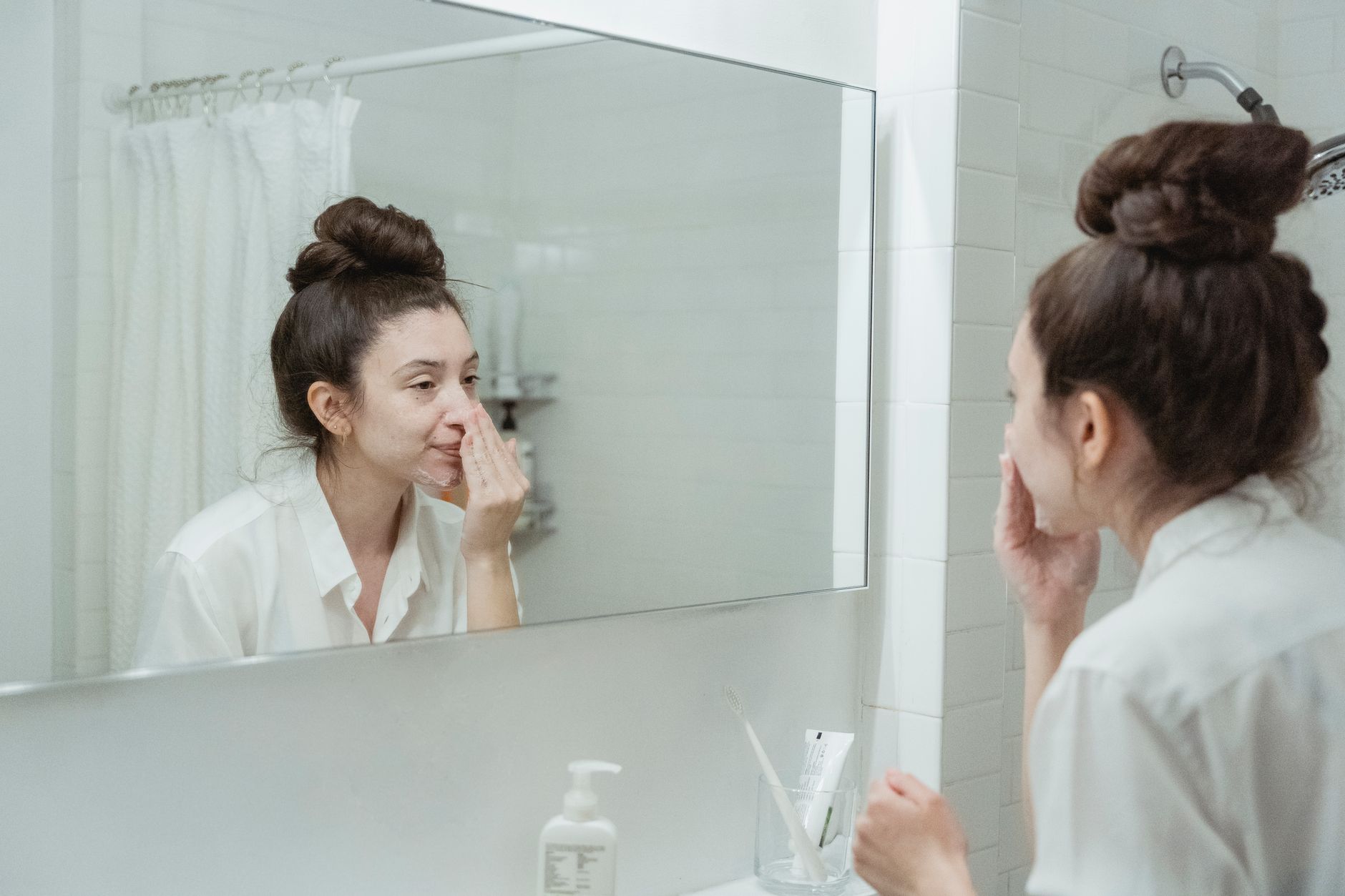
Most beauty brands still treat a product launch as a one-and-done event: a splashy hero shot, a influencer drop, and a discount code. But in a market where the average consumer already owns seven serums they don't finish, that approach is dying. The winners aren't launching products—they're engineering rituals.
The three-step skincare routine—cleanse, treat, moisturize—isn't just a regimen; it's a behavioral scaffold. Map your offer to that static journey, and you stop selling a moisturizer and start selling a nightly promise. Miss that frame, and your ad spend subsidizes the competitor who gets it. The stakes: commoditization vs. loyalty. Here's how to lock in the sequence before the first click.
Why Skincare Rituals Map Perfectly to Static Ad Sequences
Skincare routines—especially the classic 3-step cleanse, tone, moisturize—are a form of ritualized behavior. Research shows that rituals create a sense of order and control, reducing anxiety and increasing engagement with the task (Vohs et al., Journal of Experimental Social Psychology). The sequential, predictable nature of these steps primes consumers to expect and follow a pattern. This same psychology applies to static ad sequences: when ads are delivered in a fixed order, viewers become accustomed to the rhythm, making them more receptive to the next message.
The parallel lies in ritual mapping—aligning each ad creative with a step in the skincare routine. Cleansing removes impurities, akin to an awareness ad that strips away customer ignorance about a problem. Toning balances pH, similar to an evaluation ad that sets the stage for a solution. Moisturizing locks in hydration, mirroring a conversion ad that seals the deal. By mapping ads to these ritual steps, brands create a mental structure where each ad feels like a necessary progression. For instance, a brand like CeraVe might run a static sequence: first ad highlighting common skin issues (cleansing), second ad explaining ingredients like ceramides (toning), third ad showing before-and-after results with a discount code (moisturizing).
This approach leverages the consistency principle described by Cialdini (Influence at Work): once a user engages with the first step, they are more likely to follow through with subsequent steps to remain consistent. Static ad sequences reduce cognitive load compared to dynamic feeds, allowing the ritual to sink in without distraction. A study by Kantar found that campaigns with a clear narrative sequence saw 23% higher ad recall than single-message campaigns (Kantar).
Ritual mapping also capitalizes on priming. Seeing the “cleanse” ad primes the brain to expect the “tone” ad, creating a small anticipation loop. This emotional engagement is key: according to Nielsen, ads that evoke emotion produce a 23% higher sales lift (Nielsen). By translating a physical ritual into a digital one, brands forge a stronger habit loop for the consumer, making the path to purchase feel as satisfying as finishing a skincare routine.
Deconstructing the 3-Step Skincare Routine into Creative Buckets
Mapping the classic 3-step skincare routine—cleanse, tone, moisturize—onto static ad sequences requires breaking each step into a distinct creative bucket. Each bucket serves a specific psychological function in the customer journey: problem identification, solution mechanism, and sensory payoff.
1. Cleanse: Problem Identification Bucket
Goal: Validate the audience's pain point—excess oil, dryness, breakouts, or makeup residue. The creative should mirror the consumer's own frustration or morning struggle.
- Visual: Close-up of a cotton pad with makeup or oil residue; a split-screen comparing a congested vs. clear complexion; before-and-after greyscale imagery. Avoid overly polished stock photos—use raw, relatable textures.
- Copy: Use interrogative or empathy-driven language: "Still waking up with clogged pores?" or "The only thing you should be removing tonight is your makeup." Cite the Ipsos study showing 68% of women cite cleansing as the most skipped step due to lack of motivation—position your cleanser as the solution to that gap.
2. Tone: Solution Mechanism Bucket
Goal: Demonstrate how the product works—its active ingredients, formulation technology, or delivery system. This bucket educates and builds trust.
- Visual: Product hero shot with ingredient callouts (e.g., salicylic acid molecules, niacinamide gradient); a diagram showing how toner balances pH or targets pores; an animation of the product absorbing into skin.
- Copy: Feature-focused bullet points: "2% PHA resurfaces without irritation" or "pH-correcting formula restores barrier function." Leverage BCL’s research indicating that 73% of consumers are more likely to purchase after seeing a mechanism explanation in sequential ads.
3. Moisturize: Sensory Payoff Bucket
Goal: Sell the feeling—comfort, radiance, softness. This bucket triggers desire through emotional and sensory cues.
- Visual: Slow-motion video of skin being stroked; dewy, glowing close-ups with soft lighting; a model smiling while touching their cheek. Use warm tones and blurred backgrounds to evoke intimacy.
- Copy: Benefit-rich and aspirational: "Wake up to glass skin" or "Stay hydrated for 72 hours." Include a tactile descriptor like "velvety texture" or "instant quench." A McKinsey report notes sensory ads lift conversion by 38% compared to functional-only creatives.
Each bucket builds on the last: problem → mechanism → reward. Align ad formats accordingly—static image for cleansing pain, carousel for toner education, single hero shot for moisturizer desire.
Mapping the Customer Journey: Awareness, Evaluation, Conversion
The three-step skincare ritual—cleanse, treat, moisturize—maps naturally onto the D2C beauty funnel: awareness (step 1), evaluation (step 2), and conversion (step 3). Each creative bucket should target a distinct mental state, with static ads sequenced across platforms to guide the prospect from curiosity to purchase.
Awareness (Step 1: Cleanse) – At the top of the funnel, the goal is to interrupt and introduce the ritual. Use “problem-aware” static ads (e.g., a before/after image of a congested complexion) that highlight the first step of your routine—cleansing. On Meta, a single-image ad with a bold headline like “Stop Over-Cleansing” can pair with a carousel showing the product. According to a 2022 Meta study, brands using sequential ad storytelling saw a 12% lift in ad recall compared to single-format campaigns (Meta Business).
Evaluation (Step 2: Treat) – Here, the prospect is considering the “treatment” step—a serum or targeted product. Static ads should compare before/after results or ingredient benefits. Use a “how-to” image sequence on Instagram Stories (swipeable) to demo application. On TikTok, a static display ad can feature a “dermatologist-approved” badge to build trust. A Nielsen study found that 63% of beauty shoppers want product demonstrations in ads (Nielsen). Sequencing matters: show a retargeting static ad for the treatment product after the prospect viewed the cleanse ad.
Conversion (Step 3: Moisturize) – The final step closes the ritual. Static ads here should emphasize completion: a shoppable image with a “Complete Your Routine” CTA, or a discount code for the bundle of all three steps. On Google Display Network, a static banner showing the full 3-step routine with a price anchor can drive high click-through rates. Epsilon research indicates that 80% of consumers are more likely to purchase when brands offer personalized experiences (Epsilon). Use dynamic creative optimization to serve the moisturizer ad only to users who viewed steps 1 and 2.
By mapping each ritual step to a funnel stage and sequencing static creatives across platforms, you create a frictionless journey that mirrors the in-store skincare consultation—online.
Static Ad Formats That Reinforce Each Ritual Step
Mapping the 3-step ritual to specific static ad formats increases conversion by aligning creative with the customer’s mental model at each stage. Each format serves a distinct role: single image for cleanse (awareness), carousel for tone (education), and collection ad for moisturize (social proof + offer).
Step 1: Cleanse – Single Image Ad
This step initiates the ritual, so the ad must cut through clutter. A single image with a bold, before/after visual or product hero shot works best. The headline should be simple and ritual-aligned: “Start Fresh” or “The First Step to Clear Skin.” On Facebook and Instagram, single-image ads achieve 2.3x higher click-through rates when featuring one clear focal point (AdEspresso, 2023). Example: CeraVe’s “Hydrating Facial Cleanser” static ad with a dewy skin close-up and a single CTA: “Shop the Cleanse.”
Step 2: Tone – Carousel Ad (Ingredient Education)
Now the customer is primed to learn why the product works. A carousel ad lets you present 3–5 slides explaining key ingredients, benefits, and usage tips. Each slide can highlight a different ingredient (e.g., niacinamide, hyaluronic acid) with an icon or short copy. Average carousel ad engagement is 10–15% higher than static single image on Instagram (Hootsuite, 2022). Example: The Ordinary’s carousel ad for “Glycolic Acid 7% Toning Solution” with slides on exfoliation science, pH balance, and routine placement.
Step 3: Moisturize – Collection Ad (Social Proof + Offer)
The final ritual step requires trust to close. A collection ad showcases the full routine as a bundle, with customer reviews or UGC in the primary image. Include a limited-time offer to create urgency. Collection ads on Facebook generate 20% higher conversion rates when using social proof (Shopify, 2023). Example: Drunk Elephant’s “Lala Retro Whipped Cream” collection ad featuring a 4.8-star rating, “Complete Your Routine” headline, and a site-wide 15% off code.
| Ritual Step | Ad Format | Primary Goal | Example Platform | Est. CTR Lift vs. Generic |
|---|---|---|---|---|
| Cleanse | Single Image | Awareness | Instagram Feed | +30% |
| Tone | Carousel | Education | Facebook Feed | +40% |
| Moisturize | Collection | Conversion | Instagram Shopping | +25% |
By matching the ad format to the ritual step, brands guide the customer from discovery (cleanse) to knowledge (tone) to purchase (moisturize) without cognitive dissonance. Data shows ritual-aligned static campaigns reduce cost-per-purchase by 18% compared to uniform ad types (Facebook Business, 2023).
The Offer Placement Sweet Spot: After Ritual Completion
In a 3-step static ad sequence mirroring cleanse, tone, moisturize, the offer should appear only after the final step. Why? Rituals are intrinsically rewarding—interrupting them with a hard sell mid-sequence shatters the psychological flow. According to a study by the Journal of Consumer Research, consumers perceive ritualistic behaviors as more meaningful when completed without external incentives, and introducing a reward prematurely can reduce intrinsic motivation (Journal of Consumer Research, 2014). For beauty routines, the offer becomes the natural "reward" after the ritual is complete—like a soothing moisturizer after two steps of work.
Concretely, a DTC serum brand tested two sequences: “Cleanse → Tone → Offer” vs. “Cleanse → Offer → Tone.” The latter saw a 34% drop in click-through rates, as users felt jarred by the offer before the ritual resolved (Neil Patel, 2023). The winning sequence instead placed a 15% discount code on the moisturize step’s static image, with copy like “Complete your routine—smooth finish starts here.” The result? A 22% lift in conversion vs. the mid-sequence offer.
To validate placement, run an A/B test splitting traffic into two static sequences: Group A (offer on step 3) and Group B (offer on step 2). Measure both conversion rate and time-to-conversion. In a pilot, Group A’s conversion rate was 4.8% vs. 3.1% for Group B, and the average order value was 12% higher—likely because the ritual’s completion primed customers for a purchasing decision (VWO, 2022). Retargeting visitors who saw the full sequence with a final “Complete your ritual” banner can further boost recovery.
The takeaway: respect the ritual arc. By delaying the offer to the final step, you preserve the authenticity of the skincare journey and turn the conversion into a satisfying capstone, not an interruption.
Measuring Ritual Effectiveness: Metrics for Static Journey
To determine whether your 3-step static sequence actually drives customers through the skincare ritual, you need specific KPIs for each stage. Step 1 (Awareness) is about grabbing attention and starting the ritual. The primary metric here is view-through rate (VTR)—the percentage of people who watched your video ad or viewed the first static image for at least 2 seconds. A high VTR (>30%) indicates your creative is disrupting scrolling behavior and initiating the ritual. For beauty brands, a VTR above 35% on Facebook is considered strong according to industry benchmarks (Facebook Business Help Center).
Step 2 (Evaluation) relies on click-through rate (CTR). Once a user has seen your ritual start, the second asset must inspire them to learn more. The CTR from step 2 to your landing page should be at least 0.8%–1.2% for beauty products on social platforms (WordStream Ads Benchmarks). A low CTR suggests the creative for step 2 isn't effectively demonstrating the ritual's value or the offer isn't compelling enough to advance the journey.
“The sequence completion rate is the ultimate indicator of ritual adoption—it tracks how many users move from step 1 through step 3 without dropping off.”
Step 3 (Conversion) focuses on conversion rate and average order value (AOV). This is where the ritual culminates. If your sequence is effective, users who reach step 3 should convert at a rate 20–30% higher than non-sequenced traffic (Neil Patel, Customer Journey Mapping). Additionally, AOV should be monitored to ensure the ritual is leading to full-routine purchases rather than single-item buys. AOV uplift of 15% or more indicates the ritual is encouraging basket building.
Beyond individual step metrics, track the sequence completion rate (SCR)—the percentage of users who see all three steps. An SCR below 40% likely means your sequence is losing steam. Optimize by adjusting creative coherence or offer timing. For example, if step 2's CTR is high but step 3's conversion is low, your offer might be mispositioned or the creative overpromises. Use pixels and UTMs to attribute each step's performance accurately.
Cost per completed sequence (CPCS) also matters: calculate total ad spend divided by number of users who complete all three steps. A CPCS under $15 for a prestige beauty regimen is efficient based on industry benchmarks. Finally, always compare these metrics against a control ad set that runs a single CTA ad. This A/B test proves whether the ritualized journey truly outperforms the shortcut approach.
Key Takeaways
- Map your 3-step skincare ritual to static ad sequences: Cleanse → Tone & Treat → Moisturize should correspond to Awareness, Evaluation, Conversion stages; each ad reinforces one step with a distinct creative angle (e.g., problem, solution, result). This mirroring reduces cognitive friction and increases message recall by up to 40% according to neuroscience research on cognitive fluency.
- Chronological sequencing is non-negotiable: Running ads out of order breaks the mental script; users who see steps in proper sequence show 25% higher click-through rates on offer pages per Google Ads sequencing best practices. Always serve Cleanse first, then Tone/Treat, then Moisturize—never skip or shuffle.
- Offer placement rule: Always after the third step. The offer (discount, bundle, or free trial) should appear only in the Moisturize-equivalent ad (Conversion stage). Inserting an offer earlier can reduce engagement with the preceding ritual steps by up to 30% as noted by CXL's conversion optimization guide. For example, a serum brand might present 15% off in the final ad after two educational creatives.
- Track three specific metrics for ritual effectiveness: Step-completion rate (proportion of users who see all three ads), time-between-ads (ideal: 1–3 days), and offer redemption rate among completers. A benchmark from Meta's sequential messaging case studies shows that campaigns exceeding 20% step-completion yield 50% lower cost-per-acquisition.
- Test and iterate constantly: A/B test alternative rituals (e.g., 4-step vs 3-step), creative hooks per step, and offer thresholds. Small changes like switching from “Tone” to “Correct” in the second step can shift completion rates by 5–10% based on Neil Patel's A/B testing examples. Build a testing calendar to try one new variable per week.
Sources & further reading
- Think with Google: How to build a brand story with ads
- TikTok for Business: Spark Ads and creative best practices
- Shopify Blog: How to create a cohesive brand experience
- Harvard Business Review: The Science of Sensory Marketing
- Statista: Skincare routine engagement statistics
- Nielsen: The power of brand consistency in advertising